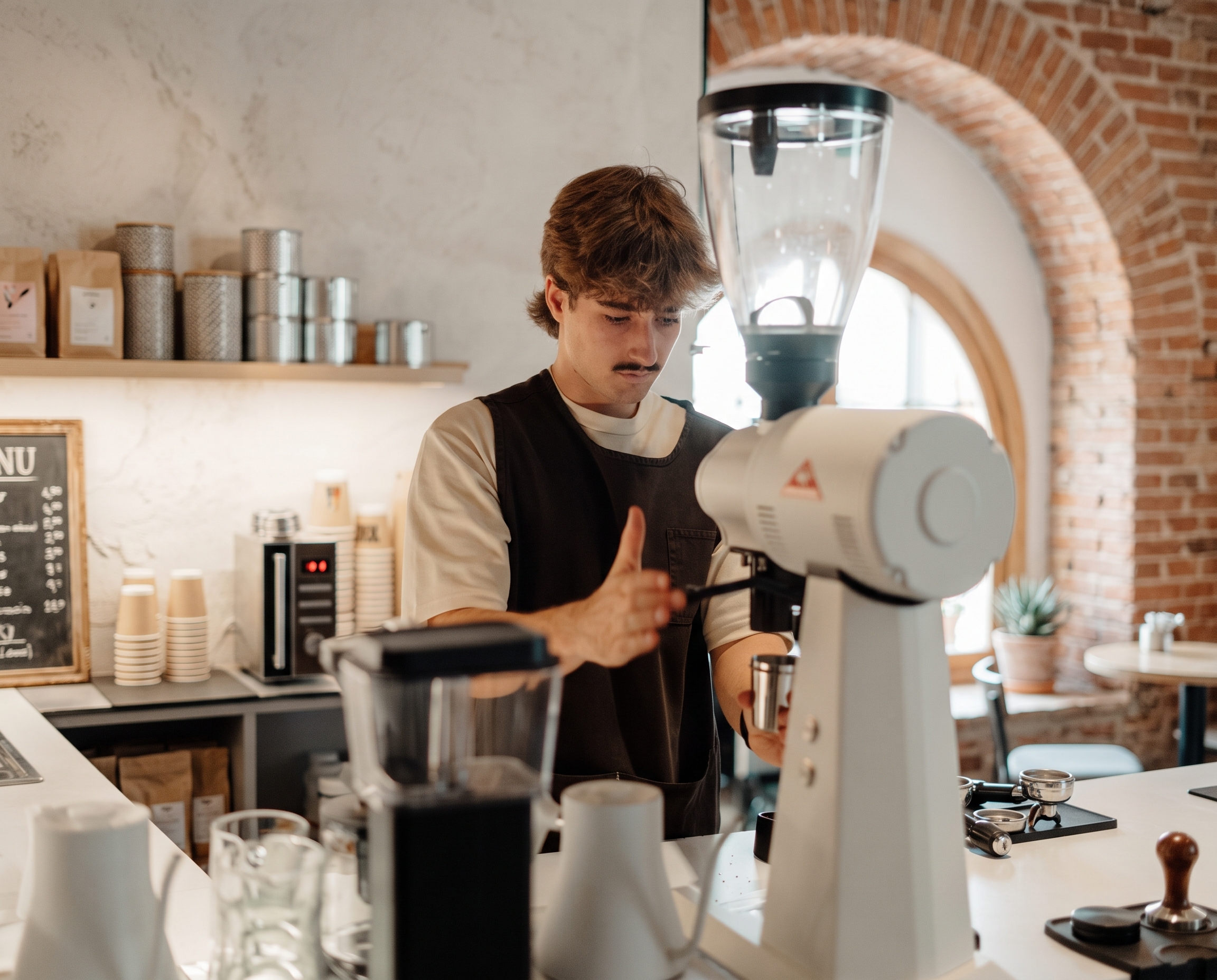
Behind every well-made coffee is someone who has ground, weighed, tamped, textured and served hundreds of times before the café even opens its doors. The barista or coffee maker works with the precision of a laboratory and the pace of a busy bar. These two demands shape their daily routine, their body and the clothes they work in.
In this article, we explore the profession from the inside: what a real shift looks like, what the job demands of the body, which details matter in a professional barista uniform, and which cafés inspire us with their approach to coffee.
What being a barista means today: from counter server to coffee maker
A barista is a professional who prepares and serves coffee, controlling grind size, dose, extraction time, temperature and milk texture. The word comes from Italian, where barista simply refers to someone who works behind a counter. With the rise of specialty coffee, the term has come to describe a technical profession with its own training.
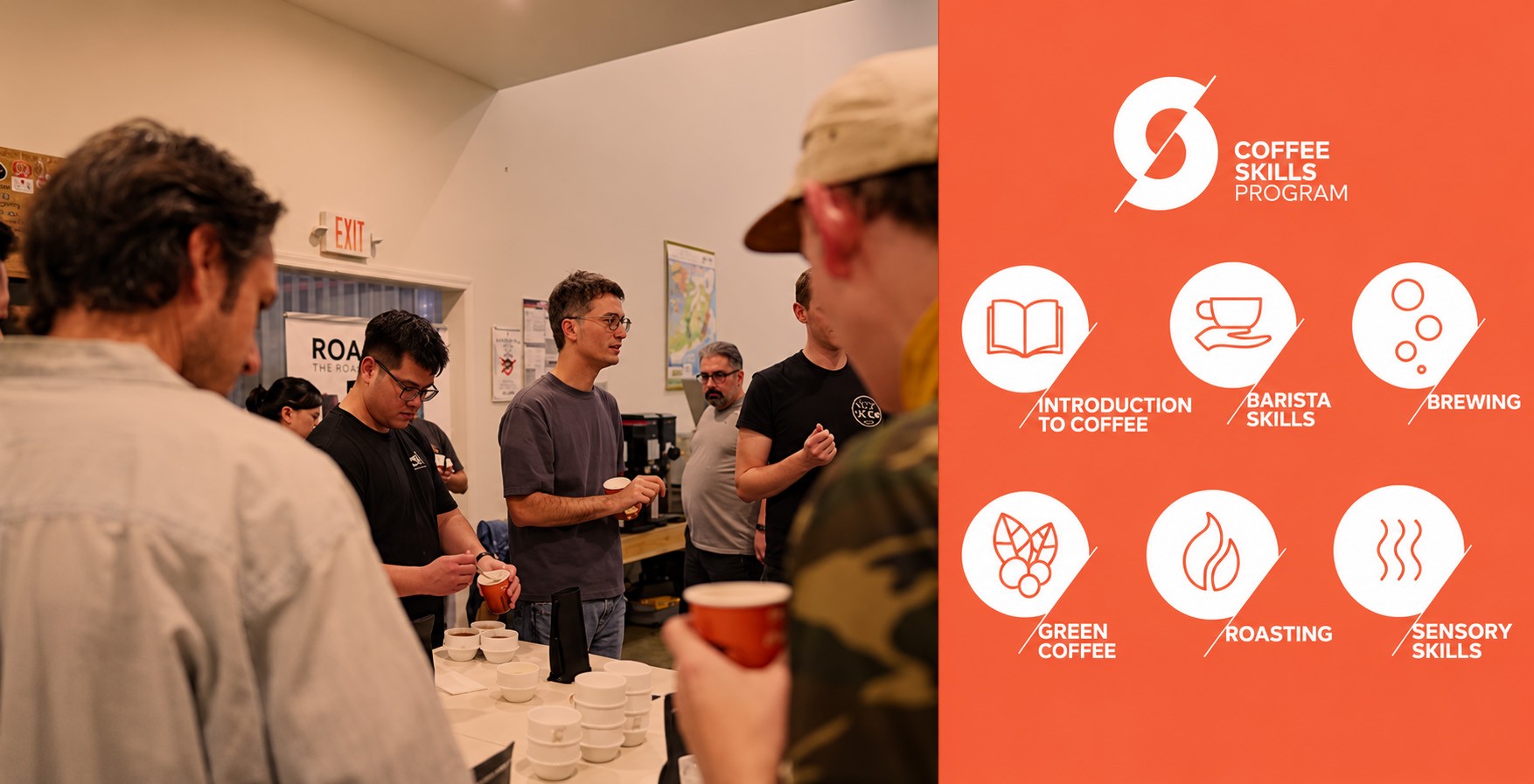
This training even has an international standard. The Specialty Coffee Association's Coffee Skills Program includes a Barista Skills module covering everything from grinder adjustment to milk texturing and latte art, as well as health and safety, customer service and basic management.
Why the profession matters more than ever
The number of cafés is growing across much of the world, and with it, demand for trained baristas. According to World Coffee Portal, China's branded coffee shop market added more than 20,000 outlets in the 12 months leading up to November 2025, surpassing 87,500 locations. In Europe, the same consultancy puts the market at 51,042 outlets after 4.7% growth, its largest increase in five years.
Growth is not limited to major chains. In the US, where the market exceeds 45,200 outlets, more than 50 independent coffee shops became chains in a single year by reaching five locations, highlighting the strength of specialty coffee.
In Tokyo, Melbourne, London or Mexico City, what sets one café apart from another still happens behind the counter. Specialty coffee customers ask about origin, roast or brewing method, and expect the person preparing their coffee to know the answers. That is why the bar team is the driving force behind the customer experience and loyalty.
A shift behind the counter
A professional barista's day starts before the first customer arrives and ends after the last one leaves. In between, there are four very different stages, each testing something different: concentration, manual skills or patience…
- Opening and dialling in. Switching on the machine, flushing the group heads and steam wands, and above all, dialling in: adjusting the grinder with the first shots until the extraction is right in terms of weight, time and flavour. Coffee changes with humidity, temperature and the number of days since roasting, so this adjustment is repeated every morning and sometimes throughout the shift.
- The morning rush. Grinding, dosing, tamping, extracting, steaming, pouring and serving on repeat, often handling several orders at once. This is where technical precision meets speed.
- The quieter hours. Time for filter brewing methods, explaining the coffee's origin to new customers, receiving deliveries, restocking and trying new recipes.
- Closing and cleaning. Backflushing, cleaning steam wands, pitchers, grinders and the counter. This is the least visible part of the job and one of the toughest: water, detergents, coffee grounds and hours spent standing.
What a barista's body knows
Working behind the counter is more physical than it looks from the other side. During a single shift, baristas knock the portafilter against the knock box, tamp coffee, tilt pitchers to pour and lift crates of milk dozens of times an hour, as described in Perfect Daily Grind's guide to preventing injuries behind the bar.
The industry even has names for the most common complaints: barista wrist and barista elbow, repetitive strain injuries affecting the wrist and elbow, particularly associated with manual tamping. That is why ergonomic solutions are becoming increasingly popular: palm tampers, automatic tampers and adjustments to counter height. Barista and trainer Scott Rao cites a study suggesting that palm tampers generate less strain than traditional tampers across all the positions analysed.
Ergonomics goes beyond the machine. A garment that pulls at the shoulders when you reach out, an apron that puts all its weight on your neck, or shoes that offer little support after eight hours on your feet all add to the fatigue of a body already working hard. For anyone spending the day behind a counter, a uniform is also a work tool.

What the job demands from a barista uniform
A professional barista uniform works when it supports every movement throughout the shift without requiring any thought. These are the needs that come up most often behind the counter and what to look for in each garment.
| Behind-the-counter need | Why it matters | What to look for in a garment |
|---|---|---|
| Tools always within reach | Thermometers, markers, cloths and notebooks are used within seconds during the rush. | A chest pocket for small items and spacious front pockets for a notebook or tablet. |
| Coffee and milk splashes | Coffee grounds, espresso drops and steamed milk end up on clothing during every shift. | Dark or textured fabrics that conceal stains and withstand frequent washing. |
| Freedom of movement in the arms and torso | Baristas constantly reach out and turn between the machine, grinder and counter. | Stretch fabrics and cuts that do not pull at the shoulders. |
| Evenly distributed weight | An apron loaded with tools and hanging from the neck strains the cervical muscles. | Adjustments that distribute the load and an adjustable fit for different wearers. |
| Hours standing on wet floors | Water, milk and coffee grounds can make the counter area slippery. | Closed, comfortable shoes with non-slip soles. |
| Café identity | In many cafés, the counter is in full view and the team is part of the customer experience. | A look that fits the venue's aesthetic, with the option to add a logo. |
The apron: the hardest-working piece
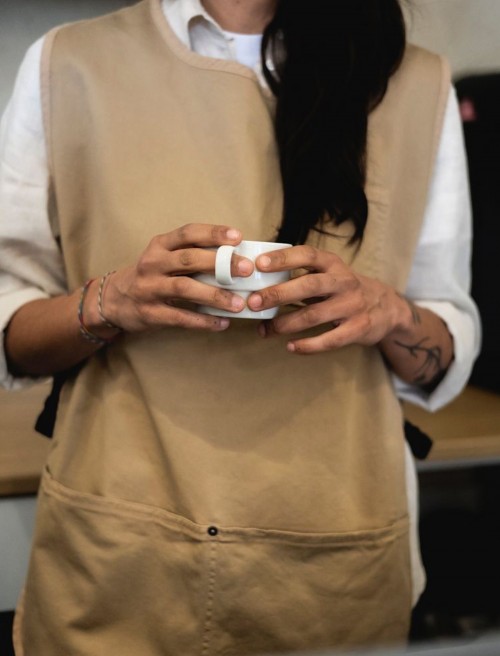
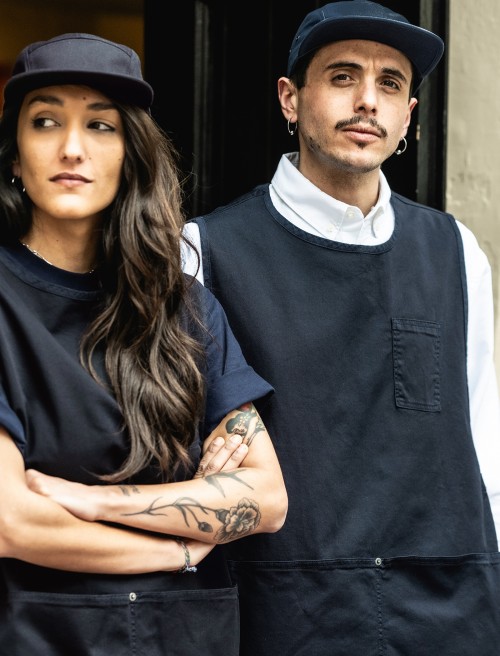
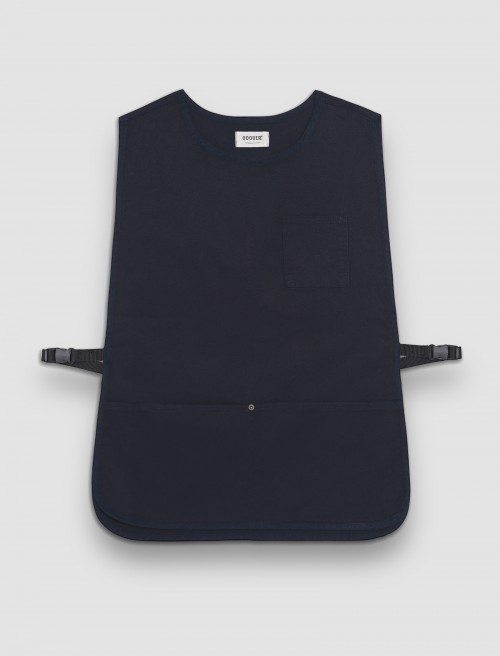
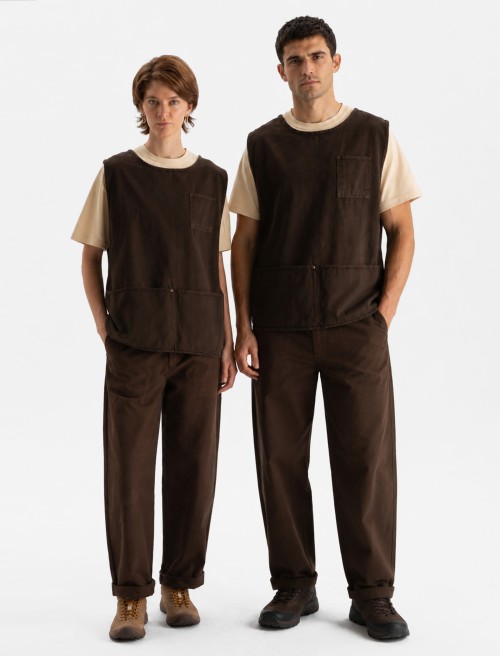
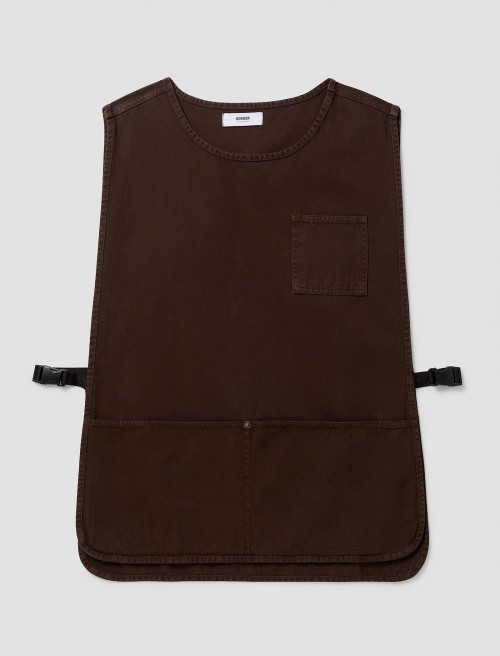
Of all the elements in a uniform, the apron says the most about the job. It protects, keeps things organised and, in many cafés, is the first thing customers notice when they approach the counter. That is why baristas often have strong opinions about their aprons: where each pocket should sit, how much the apron should weigh and how it should age.
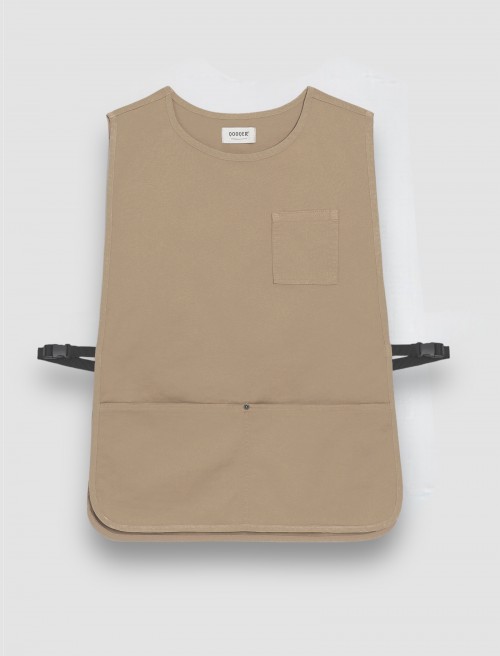
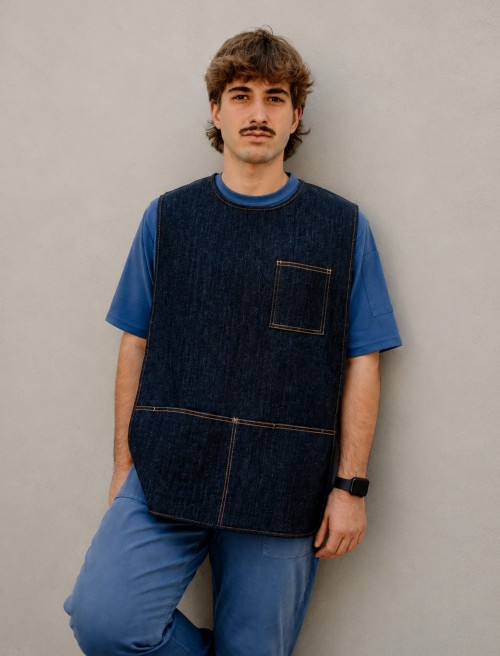
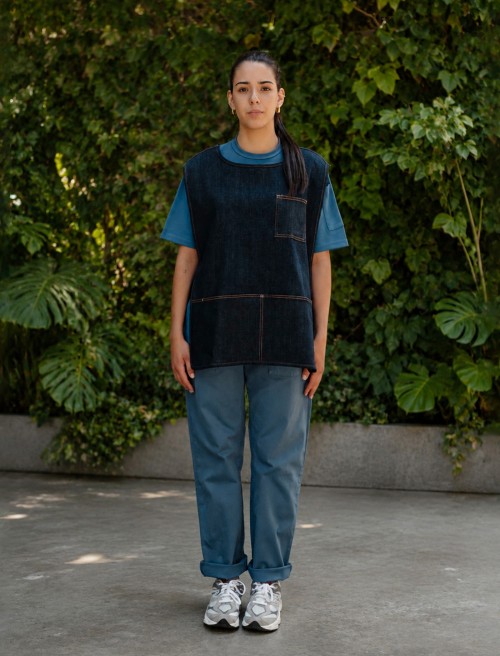
When we designed the Moka Apron, we took inspiration from classic workwear vests and added functional details: a chest pocket designed for a thermometer or pen, and two kangaroo-style pockets that can hold a notebook or tablet. It is not the only way to dress a coffee bar, but it captures what we have learnt by listening to the people who work behind one.
Cafés that inspire us
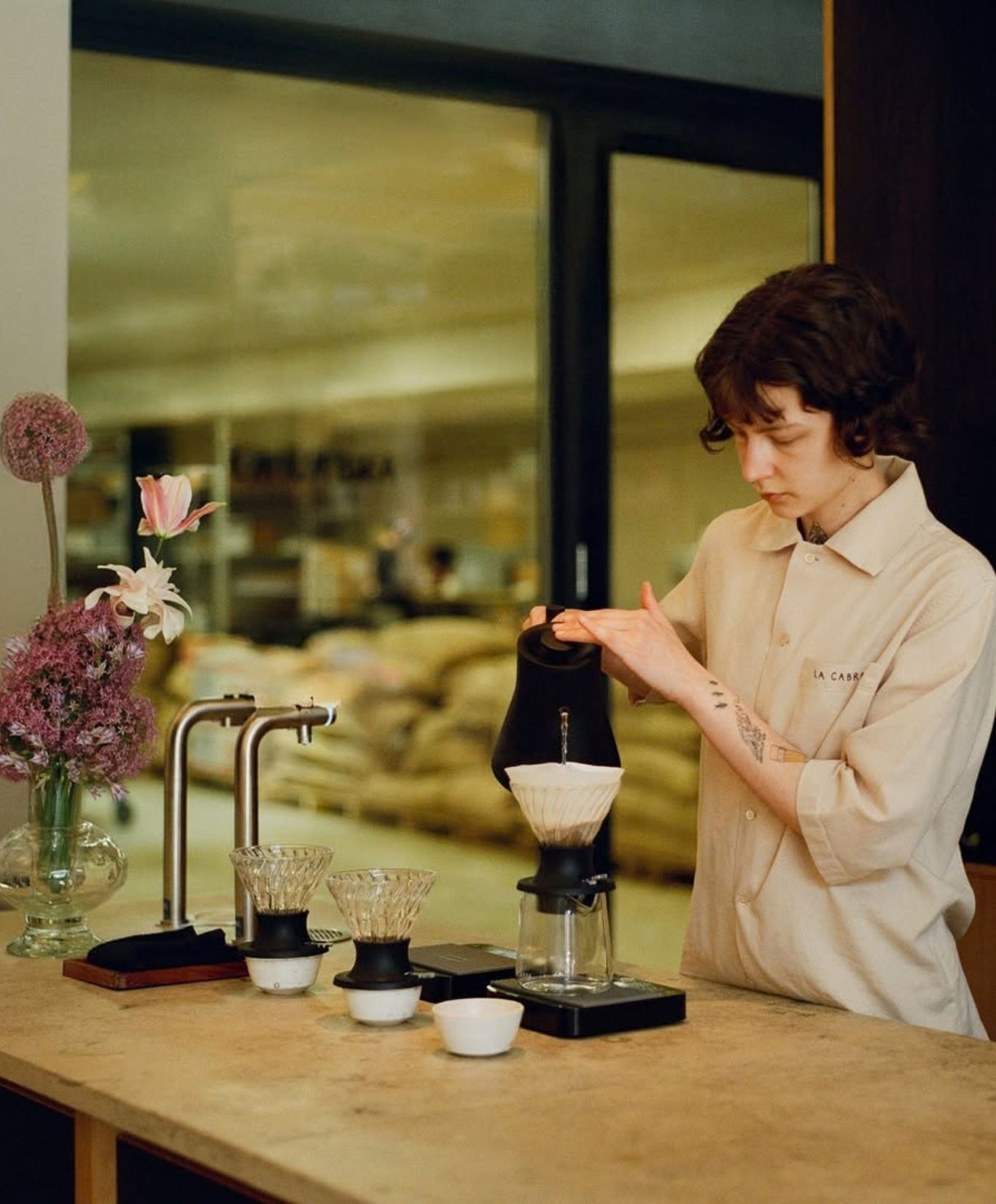
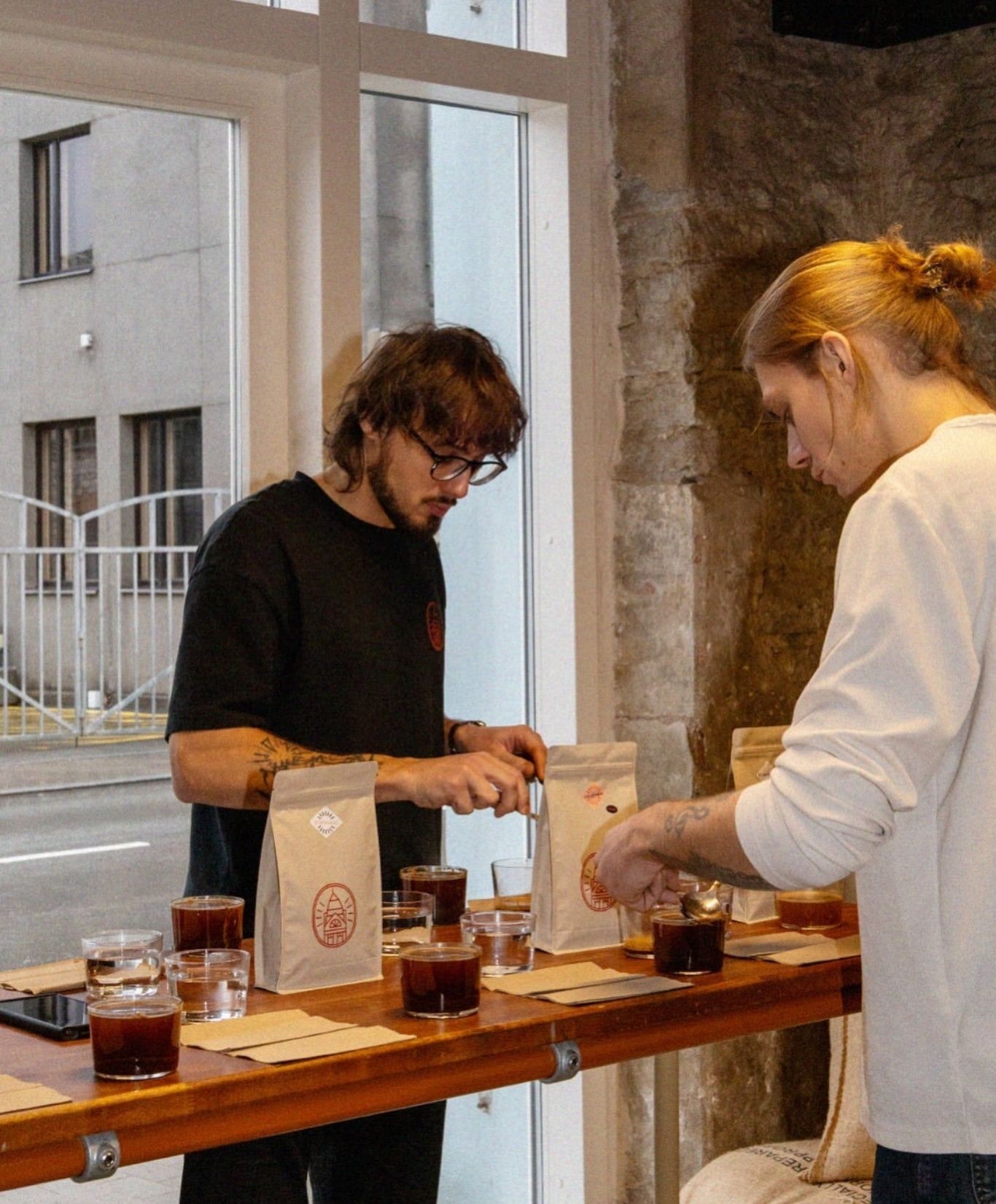
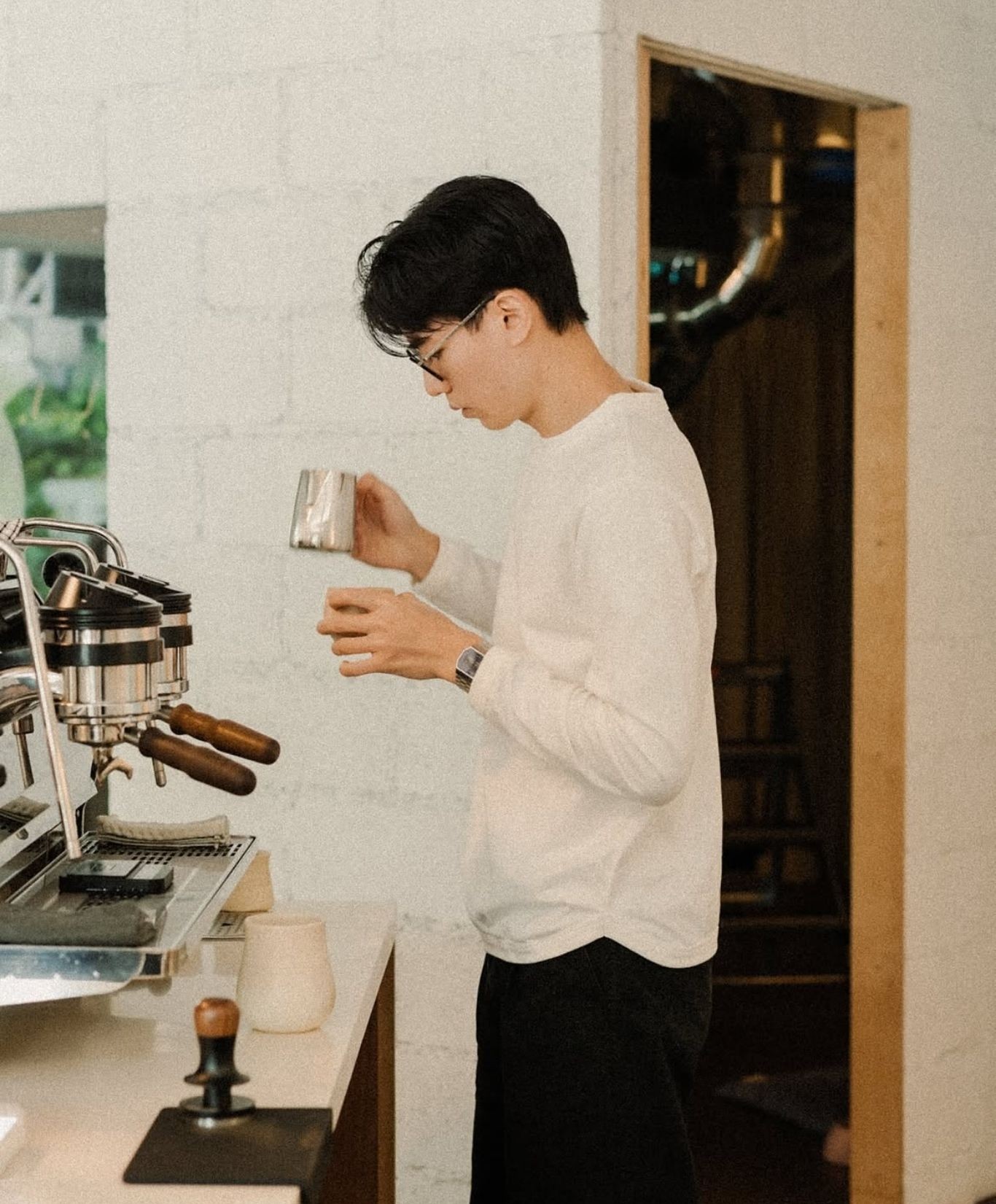
Some cafés treat the counter as a stage: the space, tableware, music and the way the team dresses all tell the same story. These are some of the cafés we follow closely for the way they care for their coffee and the image of the people who prepare it.
Frequently asked questions
What is the difference between a barista and a waiter?
A barista specialises in coffee preparation: controlling grind size, dose, extraction and milk texturing, and usually knowing the origin and roast of the coffee they serve. A waiter handles a broader range of front-of-house and counter service, although both roles often coexist in the same venue.
What should a barista uniform include?
A barista uniform should have accessible pockets for small tools, durable fabrics that conceal coffee and milk stains, freedom of movement around the arms and shoulders, and comfortable, non-slip footwear. It should also fit the café's visual identity.
What type of apron is best for a barista?
A bib apron with a chest pocket is the most common choice because it protects the torso and keeps tools close at hand. Waist aprons work well behind counters where there are fewer splashes or for those who prefer greater freedom of movement around the torso.
Which fabric is best at hiding coffee stains?
Heavyweight cotton fabrics and dark or textured colours are particularly good at concealing stains and withstanding frequent washing.
What training does a professional barista need?
There is no mandatory qualification, but the international benchmark is the Specialty Coffee Association's Coffee Skills Program, which offers Foundation, Intermediate and Professional levels in its Barista Skills module.
One counter, countless stories
Every café has its own way of approaching coffee and dressing the people who prepare it. If your counter has a story to tell we would love to hear about it. Just email us at hola@qooqer.com or tag us on Instagram.