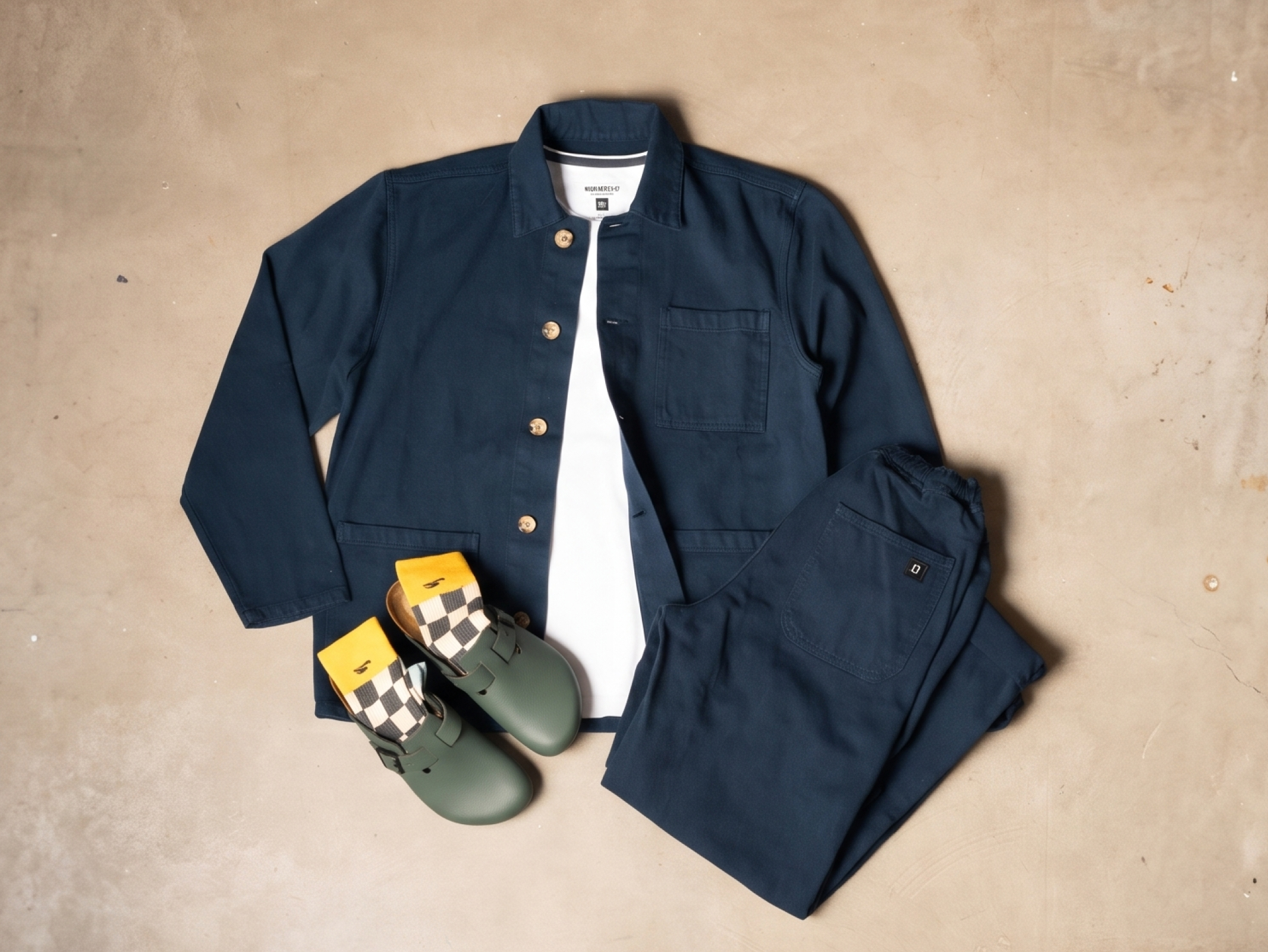
The worker jacket is a durable garment with a straight, relaxed fit, a shirt-style collar, front buttons, and large patch pockets. It originated in France in the late 19th century as a uniform for factory workers and railroad employees, and today it is one of the most versatile outerwear pieces in any wardrobe.
The worker jacket shares more than its origins with workwear: functionality, durability, and a design built to last. Today, its appeal goes beyond fashion, finding a new place in professional hospitality uniforms. In this guide, we explore where it comes from, why fashion magazines are talking about it again, and how it has become a staple in uniforms for front-of-house, bar, and reception teams.
The history of the Bleu de Travail
The worker jacket originated in industrial France in the late 19th century, when factories and railroads needed clothing that was durable, affordable, and uniform. Blue became its signature color for a practical reason: the dye was inexpensive and did a better job of concealing the grease and dirt associated with everyday work. Hence its name: bleu de travail, or “work blue.”
Railroad workers adopted it as their uniform and helped establish its design. Sleeves were rolled up to allow freedom of movement, the heavy fabric protected workers from sparks, and patch pockets kept tools and small essentials within easy reach. Every detail served a specific purpose.
Over the decades, the bleu de travail moved beyond factories and workshops. In 1968, some Parisian students adopted it as a symbol of solidarity and identification with the working class. Years later, street-style photographer Bill Cunningham also made it part of his signature look, drawn to its comfort and practical pockets.
More than a century later, its design still retains many of those original features. This combination of durability, comfort, and functionality explains why it has found a new place in hospitality. In restaurants and bars, its pockets keep small work essentials close at hand, while its silhouette creates a professional, contemporary look that's less formal than a blazer.

Why the worker jacket is trending again
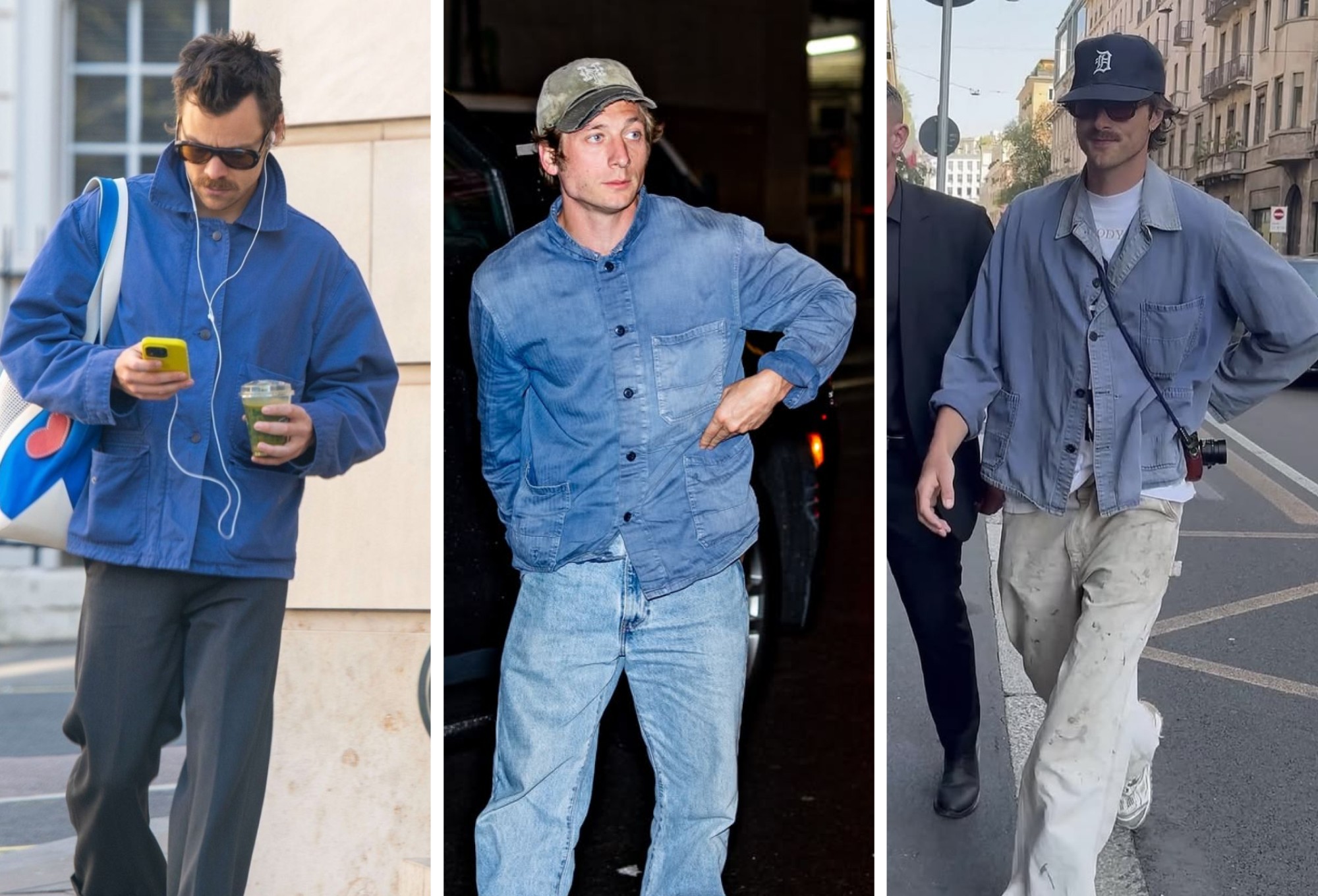
The worker jacket has become one of the key outerwear pieces for Fall/Winter 2026. It's gaining visibility both among brands specializing in workwear and contemporary fashion labels. Trend analysts even point out that it's gaining ground on the traditional wool coat in many wardrobes.
Leading fashion magazines have also turned their attention to this garment, each highlighting a different aspect of its versatility:
- Esquire presents it as one of the most versatile pieces in a man's wardrobe, with lasting appeal beyond seasonal trends.
- GQ highlights its place in the wardrobes of figures such as Harry Styles, Jacob Elordi, and Jeremy Allen White, as well as updated versions featuring double-breasted cuts, linen blends, and herringbone fabrics.
- Grazia suggests it as an alternative to the trench coat and suede jacket for fall, also exploring its feminine appeal.
- Highsnobiety focuses on its year-round versatility, from transitional weather to summer nights.
Its comeback has a lot to do with a way of dressing that prioritizes functional garments, durable fabrics, and relaxed silhouettes. The worker jacket brings all these qualities together, proving that a garment originally designed for work can also fit seamlessly into contemporary wardrobes.
The worker jacket as a hospitality uniform
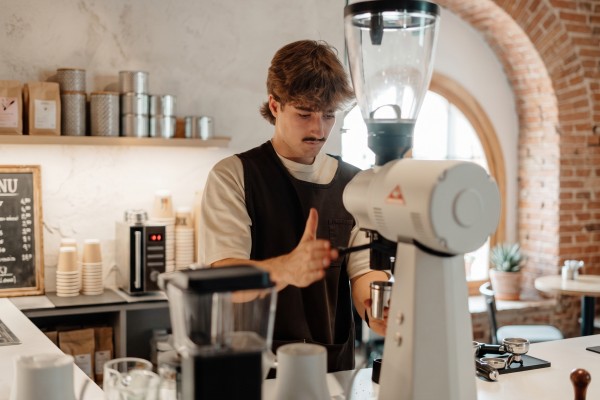
Its natural evolution has taken the worker jacket from workshops and factories to restaurants, cafés, hotels and other professional spaces. Its design combines a polished look with functional details built for day-to-day work, which is why it has become a compelling alternative to blazers and other traditional uniform pieces.
What makes it a great choice for outfitting a team?
- An alternative to the blazer: it brings a professional, modern image to the dining room, front desk or bar, without feeling too formal.
- Functional pockets: they keep order pads, pens, bottle openers and other small work tools within reach.
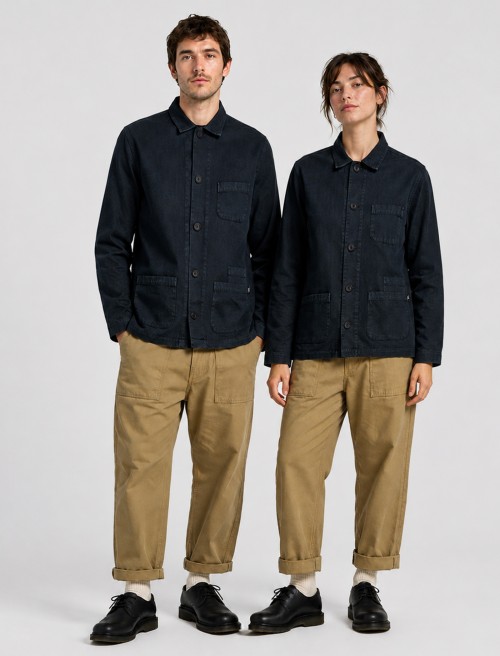
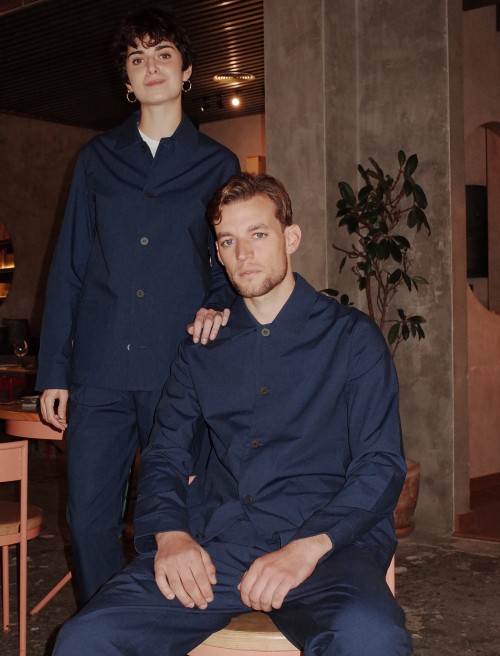
- Unisex design: it makes choosing sizes and styles easier, so the whole team can share the same visual identity.
- Logo customization: chest embroidery turns it into a recognizable part of the business’s identity.
- Multiple combinations: it can be paired with matching vests and pants to create different looks within the same team.
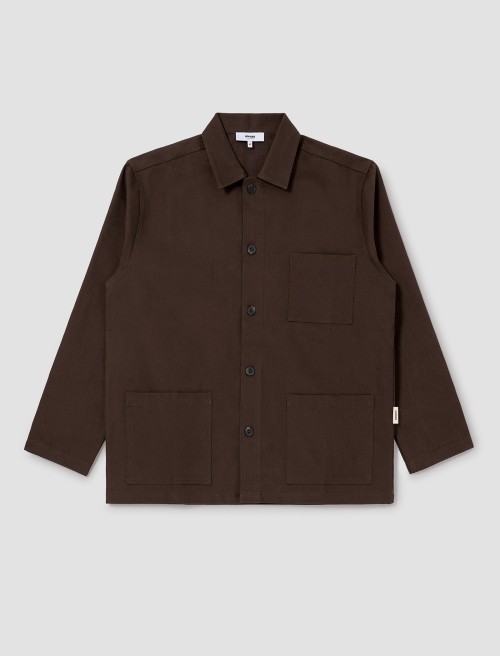
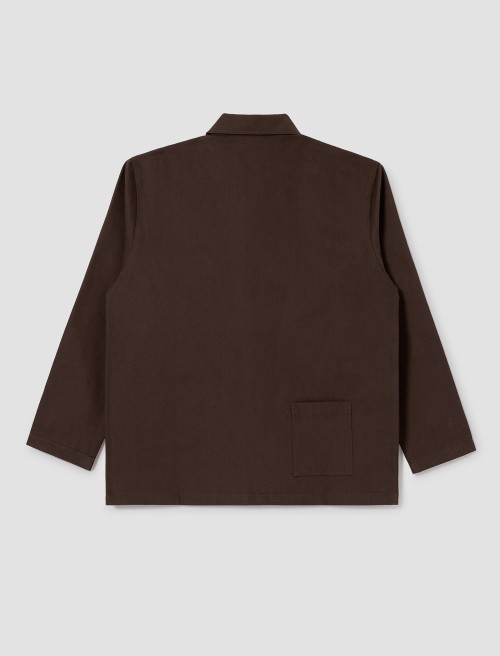
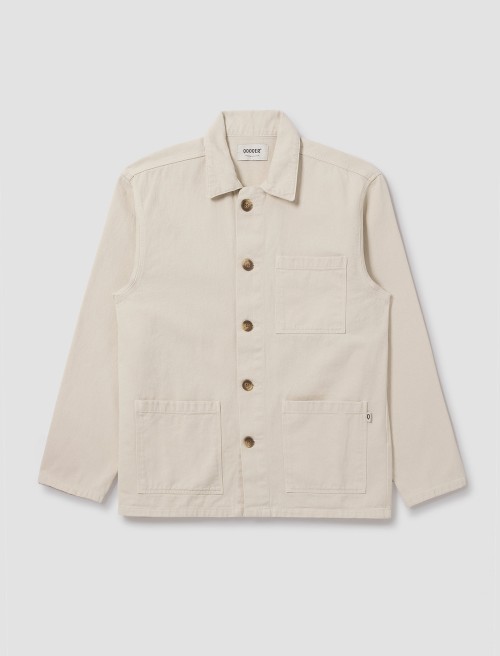
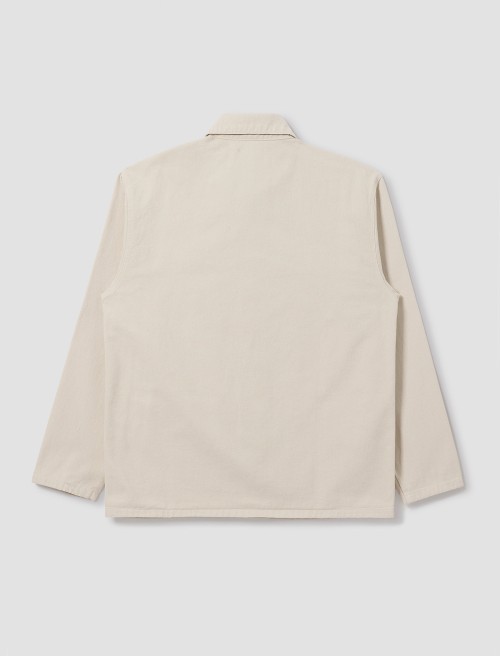
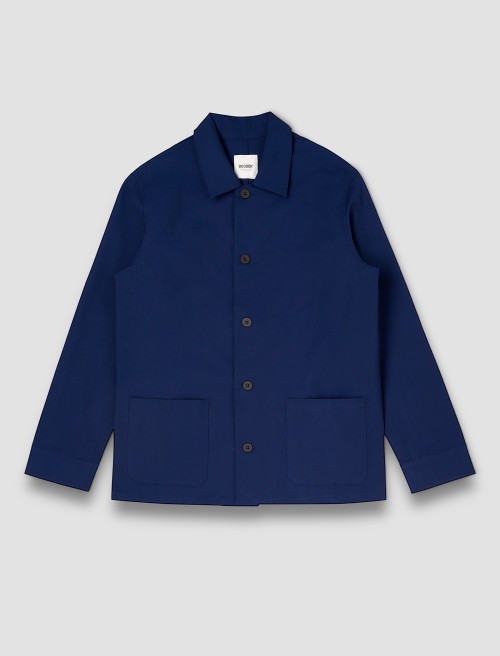
In our collection, the worker silhouette adapts to different fabrics, finishes and professional needs. Here are four styles that reinterpret its original codes:
|
Model |
Fabric |
Features |
|---|---|---|
|
2/1 twill, 200 gsm, 100% organic cotton |
Garment-dyed. Three outer pockets and one inner pocket. Lightweight and functional. |
|
|
Gabardine, 320 gsm, 100% cotton |
Garment-dyed. Three pockets, classic collar and contrast buttons. Available with matching pants and vest. |
|
|
Denim, 280 gsm, 98% cotton, 2% elastane |
Straight cut, three patch pockets and contrast buttons. Available with matching Clay pants. |
|
|
Ripstop, 210 gsm, 97% cotton, 3% elastane |
Open collar, flap pockets and button cuffs. Available with matching vest and Unity pants. |
How to choose a Worker Jacket for your team
Not all worker jackets are designed for the same needs. Before choosing a specific style, it's worth considering a few key factors:
- Fabric: Each fabric has its own character. Cotton twill and gabardine drape well and create a more polished look. Denim develops more character with every wash. Ripstop, with its distinctive grid weave, offers greater resistance to snags.
- Fabric weight: Determines the fabric's structure and durability. A lighter weight feels cooler and works better indoors, while a heavier fabric provides more structure and a more defined silhouette.
- Functionality: The number and placement of pockets, the type of closure, and the cuffs can make a real difference throughout the workday.
- Your business identity: Color, fit, and the option to add a logo help create a cohesive look that reflects the style of your restaurant or business.
- Team coordination: Pairing jackets with pants and vests from the same collection makes it possible to create complete uniforms and maintain a recognizable visual identity.
The key is finding the right balance between comfort, durability, and style. After all, that's exactly what the first people who wore these jackets were looking for: a garment that works as hard as the person wearing it.

For more than a century, the worker jacket has shown that style can be functional, too. It was born for work and is now part of uniforms for front-of-house, bar, and reception teams.
Frequently asked questions
What is a worker jacket?
It's a durable cotton work jacket with a straight, relaxed fit, a shirt-style collar, front buttons, and patch pockets. It originated in France in the late 19th century as workwear for factory workers and railroad employees.
What's the difference between a worker jacket and a chore jacket?
There is no difference: they're two names for the same garment. Chore jacket or chore coat is the more common term in the United States, while bleu de travail is the French name for the original blue version.
Are worker jackets in style in 2026?
Yes. It's one of the key outerwear pieces for Fall/Winter 2026 and appears in collections from heritage workwear brands and contemporary labels, as well as in magazines such as Esquire, GQ, and Grazia.
How should a worker jacket fit?
Relaxed, but not oversized: the shoulders should sit in the right place, the sleeves should reach the wrists, and there should be enough room for a light layer underneath. With unisex styles, women who usually wear women's sizing often find that sizing down works best.
What's the best fabric for a worker jacket?
It depends on how you'll use it. Cotton twill and gabardine are the most versatile options; moleskin provides more warmth; ripstop with a little elastane allows greater freedom of movement during long shifts; and linen is ideal for summer.
Can you wear a worker jacket in summer?
Yes. Choose a lightweight cotton or linen version and wear it over a T-shirt. It's a transitional-season garment that works practically all year round.
Can a worker jacket be used as a work uniform?
Yes, and more hospitality businesses, retailers, and hotels are choosing it. It offers an alternative to the blazer, has practical pockets, and can be customized with a logo.
How do you wash a worker jacket?
Wash it at 30°C, inside out, with similar colors, and without bleach. Air-drying is best to help the fabric and color age well.