At QOOQER, we have been dressing professional chefs and kitchen teams for years. This guide brings together everything we have learned from working with them: which materials truly stand up to demanding use, which pieces are essential, and how to care for your uniform so it lasts.
What should a professional chef uniform have?
A professional chef uniform should meet four requirements: thermal and physical protection against heat and splashes, ergonomics for constant movement, durability against daily friction, and resistance to intensive washing without losing its shape or color. It is not simply workwear: it is a performance and safety tool that also defines the team's visual identity.
To fulfill its purpose, every technical uniform should provide four key benefits:
- Thermal and physical safety: Acts as the first line of protection against radiant heat, splashes of boiling oil, accumulated steam, and chemical cleaning spills.
- Ergonomics and thermoregulation: Designs adapted to constant movement, breathable fabrics with good ventilation, and lightweight materials that help prevent muscle fatigue.
- Structural durability: Reinforced construction capable of withstanding continuous friction and the wear of everyday professional use.
- Hygiene and maintenance: High-tenacity fabrics that withstand intensive washing cycles at high temperatures without losing their shape, color, or protective properties.
Guide to recommended materials and fabrics
The material each uniform garment is made from determines body ventilation, freedom of movement, and resistance to heat. Choosing the right fabric according to the type of station or kitchen temperature can make the difference between a comfortable service and an overwhelming one.
| Fabric | Typical composition | Key features | Ideal garments | Recommended use |
|---|---|---|---|---|
| 100% cotton or cotton-rich fabrics | 100% organic cotton or a blend with a high percentage of cotton (180–220 g/m²) | • Breathable • Soft and natural • Highly resistant to washing |
Shirts Chef jackets Aprons |
High-temperature kitchens and sensitive skin. |
| Ripstop (POLYESTER / COTTON) | 65% polyester / 35% cotton (160–220 g/m²) | • High tear resistance • Lightweight and durable • Comfort and protection |
Pants Aprons |
High-performance kitchens and intense work environments. |
| Interlock (COTTON / POLYESTER / ELASTANE) | 60–70% cotton / 30–40% polyester (+ 3–5% elastane) (180–220 g/m²) | • Maximum stretch • Ergonomic comfort • Freedom of movement • Soft and durable |
T-shirts Chef jackets Polos |
Dynamic services that require flexibility and superior physical comfort. |
| Professional denim (STRETCH) | 98% cotton / 2% elastane (280–340 g/m²) | • Durable and hard-wearing • Controlled stretch • Timeless and functional look |
Pants Aprons |
Modern kitchens, open kitchens, and gastronomy. |
| Tencel™ Stretch (LYOCELL) | 60% Tencel™ / 35% cotton / 5% elastane (160–200 g/m²) | • Breathable and thermoregulating • Soft to the touch • Excellent stretch and drape |
Shirts Chef jackets |
Kitchens with a clean aesthetic, high standards, and prolonged wear. |
| Technical fabrics (4-WAY STRETCH / SOFTSHELL) | 88–92% polyester / 8–12% elastane (140–220 g/m²) | • 4-way stretch • Quick drying • Liquid and stain repellency • Highly durable and lightweight |
Technical pants Chef jackets |
High-performance kitchens, humid environments, or exposure to liquids. |
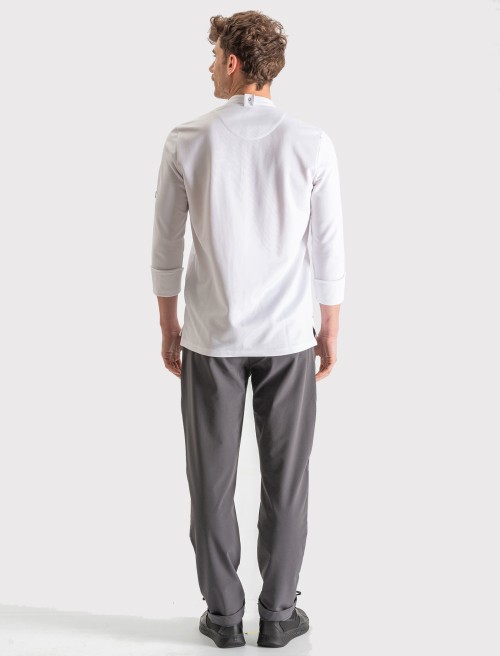

What fabric should you choose for your work pace?
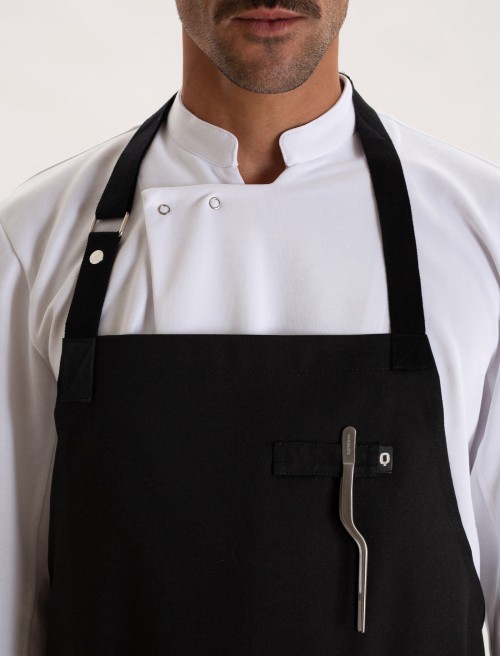
The choice depends on the type of service: ripstop for extreme work rhythms, Klopman for maximum washing performance, interlock for total mobility, organic cotton for comfort and breathability, and denim for open kitchens.
- Ripstop for extreme-paced kitchens and constant friction: Its grid-like construction helps stop snags from becoming permanent tears.
- Interlock for dynamic services and total mobility: The ultimate ergonomic option. Its interwoven structure provides superior stretch and comfort.
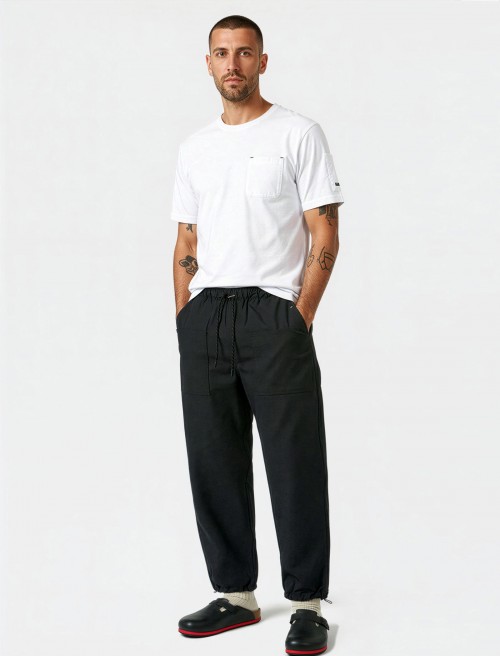
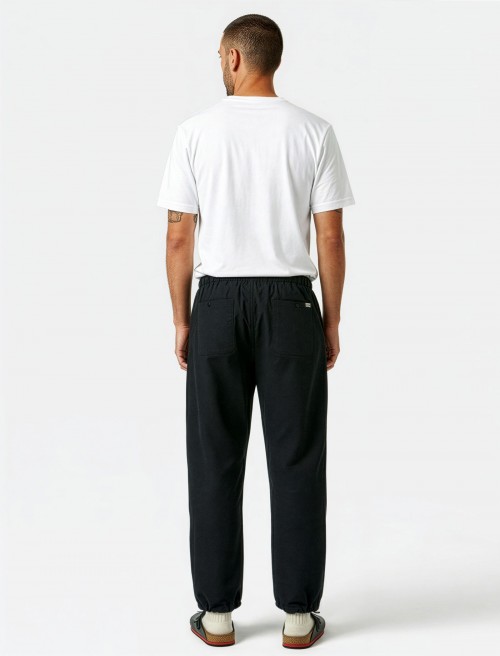
- 100% organic cotton for comfort and breathability: It naturally absorbs moisture, promotes ventilation, and helps prevent skin irritation. It is the fabric used for our Chef Tee, the perfect base layer if you want to work light, cool, and comfortably without compromising your professional appearance.
- Professional denim for open kitchens and brand concepts: A heavyweight fabric that protects against abrasion and naturally conceals small stains from service.
- Tencel™ for those looking for a combination of softness, breathability, and a more refined aesthetic: Perfect for garments worn for many hours thanks to its comfort and versatility.
- Technical fabrics for maximum performance and freedom of movement: Technical stretch constructions provide multidirectional elasticity, lightweight comfort, and, depending on the finish, quick drying and liquid repellency.
Technical finishes: what do they add to a kitchen uniform?
The finish applied to a fabric determines how the garment performs against intensive washing, cleaning products, and daily use without changing the base fabric. In a professional kitchen, choosing the right finish is just as important as choosing the right material.
Bleach-resistant fabric: essential for kitchens with constant disinfection
Bleach-resistant fabric withstands contact with chlorine-based cleaning products without fading or losing strength, which is essential in kitchens with demanding disinfection protocols. Uniforms often come into contact with bleach during surface cleaning or even through direct splashes, while conventional fabrics can fade or weaken with every exposure.
At QOOQER, this finish is used in pieces specifically designed for the most intensive use, such as the Grados Bruno apron, Negro and Isla, Midi Negro and Blue, or QUCHILLO Negro.

Wrinkle-resistant finish: a polished look shift after shift
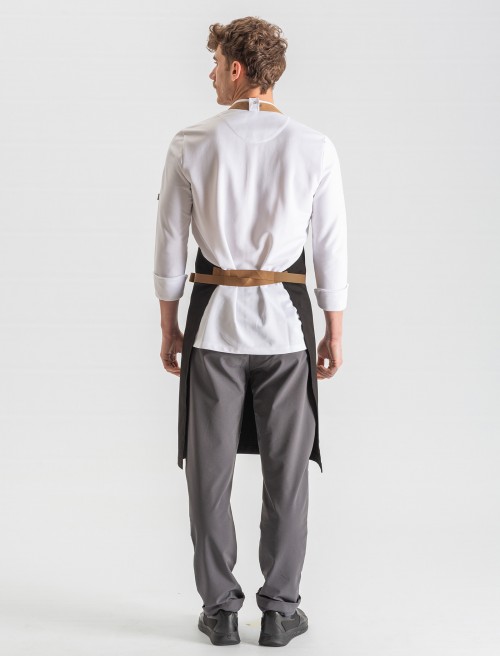
A wrinkle-resistant finish keeps garments looking smooth and polished even after intensive washing and long shifts, reducing the need for ironing. It is designed for professionals who need an impeccable appearance from the beginning to the end of service without spending extra time caring for their uniform.
It can be found in shirts and chef jackets such as Concept, Stan, Kioto, and Madison.


The essential pieces of a complete chef uniform
A complete chef uniform consists of five essential pieces: chef jacket, pants, apron, chef hat, and slip-resistant footwear, each with a specific technical function.
Chef jacket
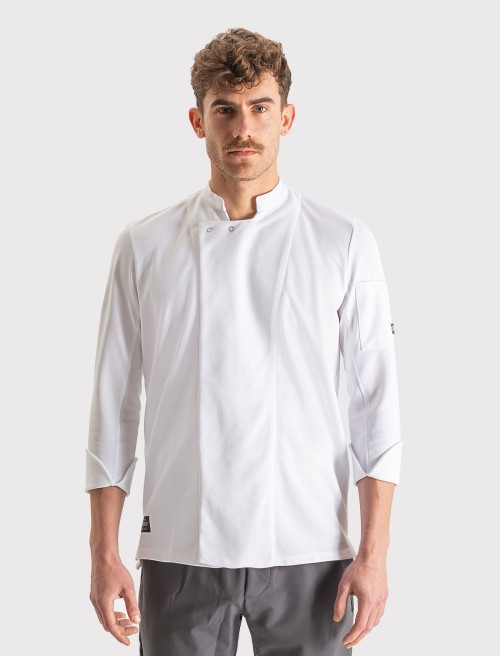
We have reinvented the classic chef jacket to combine traditional design with the freedom of movement required by modern kitchens. An updated concept that brings together traditional elegance, superior comfort, and contemporary design.
Explore the chef jacket collection
Kitchen pants
We favor a much more contemporary style with relaxed cuts such as our Regular and Wide Fit silhouettes, designed to provide maximum freedom of movement and a polished urban aesthetic.
Professional apron
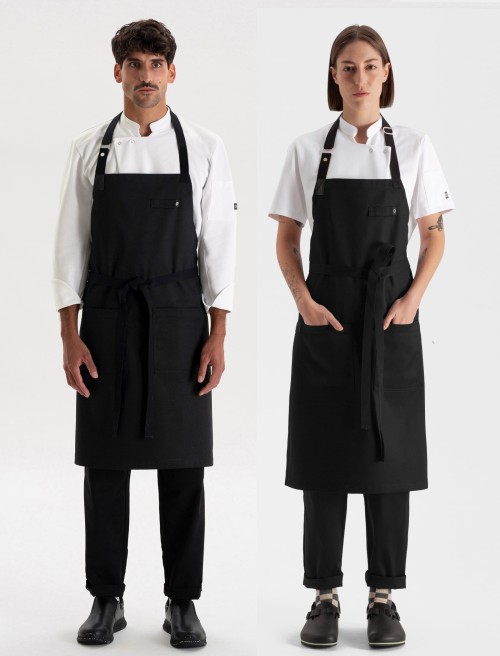
Minimalist designs, modern aesthetics, and maximum functionality every shift. We make our aprons using highly durable materials that withstand long shifts and intensive washing without losing their shape or color.
Chef hat
Hygiene, standards, and style in a single piece. In addition to helping ensure food safety during service, the chef hat is the final modern detail that completes the look of a professional kitchen team.
Slip-resistant footwear
Kitchen safety starts from the ground up. Professional certified footwear should ideally include:
- Slip-resistant rubber soles designed for wet or greasy surfaces.
- Ergonomic insoles with cushioning to reduce joint strain.
Explore slip-resistant kitchen footwear
Choosing the right kitchen uniform is not an aesthetic decision: it is a decision about safety, comfort, and brand image.
Frequently asked questions
Which fabric handles heat best in a kitchen?
100% organic cotton and technical fabrics are among the most breathable options for kitchens with sustained high temperatures.
How often should a chef uniform be replaced?
There is no fixed rule: it depends on wear, the pace of the kitchen, and the number of washes. When the fabric loses strength or the seams begin to weaken, it is time to replace the garment.
How many uniform garments are recommended per employee?
Ideally, plan for 2 to 3 units of each garment per employee. This ensures there is always a clean replacement available while another garment is being washed.
What footwear is recommended for a professional kitchen?
Slip-resistant rubber soles and ergonomic cushioned insoles: it is not just about comfort, but workplace safety.
Can a team uniform be customized with the restaurant logo?
Yes, you can customize your uniform with embroidery or screen printing.