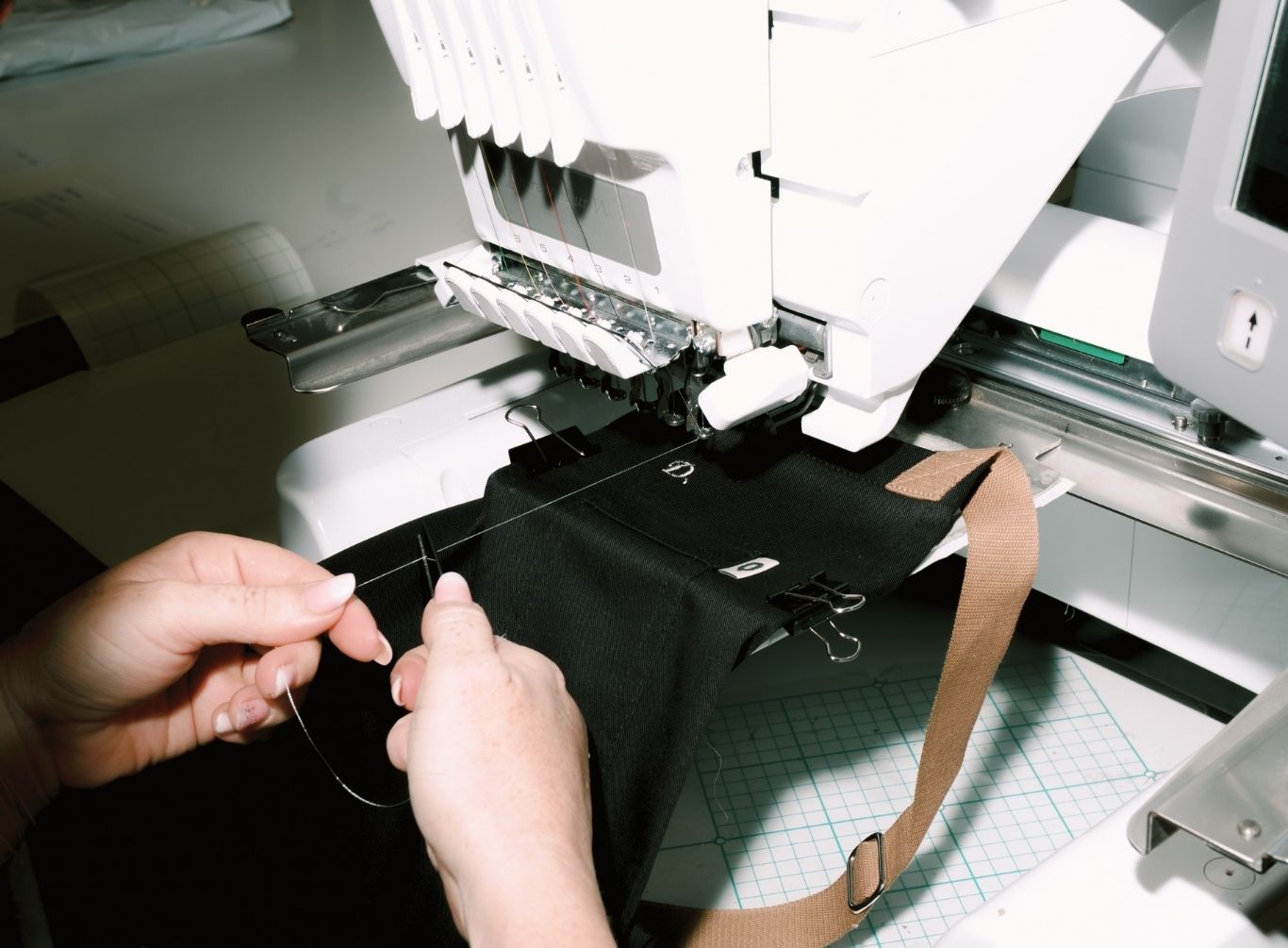
At QOOQER, we customize professional uniforms for hospitality businesses using two textile branding techniques that guarantee high-quality corporate results: embroidery and water-based screen printing.
Embroidery, made with thread that withstands industrial washing, is ideal for heavyweight fabrics and is available for orders starting from a minimum of 6 units. Screen printing, using our sustainable water-based technique, is applied to lighter fabrics from 30 units onwards, allowing images to be printed with a high level of detail and in larger sizes than embroidery.
Our team of professional advisors guides you throughout the entire process, adjusting the technique, size, and logo placement to each business's brand identity.
Key factors when selecting the right customization technique
Choosing a customization technique is not just an aesthetic decision, but an operational one: choosing the wrong technique can cause the garment to deteriorate prematurely or affect the way the fabric falls. Before customizing work uniforms, it is important to consider three variables:
- Fabric composition and weight. Heavyweight and robust fabrics, such as aprons and chef jackets, are ideal for embroidery. Lightweight or stretchy garments, such as T-shirts, perform better with screen printing, which does not add stiffness.
- Level of detail and logo color palette. Designs with small details or fine typography are reproduced more effectively with screen printing. Embroidery provides a subtle raised effect, perfect for clear, corporate vector logos.
- Conditions of use and care. In hospitality environments, garments are exposed to high-temperature washing and constant friction. The chosen technique must ensure that colors do not fade and designs do not crack with everyday use.

Professional embroidery: Elegance and maximum durability
Embroidery is the classic technique of choice when the goal is to convey a premium, solid, and traditional brand image. Its main advantages are:
- Premium raised finish: The thread adds a three-dimensional texture and subtle sheen that enhance the perceived value of the uniform. It is the perfect finish for restaurants, specialty coffee shops, and hotels that pay attention to every detail.
- Extreme durability: We use high-tenacity threads that withstand high-temperature industrial washing, aggressive cleaning products, and constant friction without losing color or unraveling.
- Ideal for small batches: Unlike other techniques, embroidery offers great flexibility. At QOOQER, we offer this service for orders starting from a minimum of 6 units, making it ideal for dressing smaller teams or handling quick replacements.
- Recommended fabrics: It is the ideal technique for heavyweight garments and robust fabrics that can support the weight of the thread without deforming, such as aprons, chef jackets, shirts, and polos.
Water-based screen printing: Sustainability and a soft feel
For our prints, we use water-based screen printing, a sustainable screen-printing technique that contains no plastics, heavy metals, or harsh chemical solvents.
- Soft feel and breathability: The ink penetrates and bonds with the fabric instead of creating a plastic surface layer. Because it does not block the fabric's pores, the garment retains its natural freshness and comfort.
- High durability: This complete integration with the fabric prevents the design from cracking, splitting, or peeling during washing.
- Easy care: Garments maintain their quality without requiring special care, making everyday use easier for the team.
- Sharp, corporate finish: We typically use this technique for 1- or 2-color designs. The final result is even and sharp, making it ideal for more detailed logos and larger designs than those possible with embroidery.
- Recommended fabrics: It is the perfect technique for lightweight or stretchy garments from 30 units, such as T-shirts, sweatshirts, or polos.
Comparison of customization techniques
| Criteria | Embroidery | Water-based screen printing |
|---|---|---|
| Minimum order | 6 units. | 30 units. |
| Visual effect and texture | Raised finish, high perceived value. | Flat finish, integrated into the fabric, soft feel. |
| Resistance to industrial washing | Maximum: withstands high temperatures and harsh products. | High: Does not crack or split. Easy care with no special requirements. |
| Recommended for | Aprons, chef jackets, shirts, polos, and sweatshirts. | T-shirts, polos, and sweatshirts. |
| Design complexity | Simple logos and clean text. | More detailed designs, limited colors, and larger sizes. |

Customization process
At QOOQER, we understand that your logo is your company's most valuable asset, which is why we have designed a personalized service process where our team of expert advisors supports you every step of the way:
- Personalized technical advice: We receive your design and advise you on the best customization technique based on the fabric of the product you choose.
- Design and color: We help you select the threads or inks that best reflect your brand identity, deciding together on the exact size and placement so the logo remains visible throughout service.
- Digital mockup: Before moving into production, we create and send you a detailed digital simulation. This mockup allows you to visualize the actual result on the garment, so you can see exactly how your team will look and approve every detail with complete confidence.
From specialty coffee shops and urban bistros to fine-dining restaurants and boutique hotels, we have helped countless businesses reflect their personality through their professional uniforms.
This co-creation approach to customization ensures that the final uniform is not just workwear, but a unique and professional extension of your business.
Frequently asked questions
What is the minimum order for customizing uniforms at QOOQER?
The minimum order depends on the technique: 6 units for embroidery customization and 30 units for textile screen printing. This difference is due to the preparation processes required for each technique.
Which lasts longer, embroidery or screen printing?
Embroidery offers greater resistance to intensive industrial washing thanks to the durability of the thread at high temperatures. Screen printing is also highly durable, although garments should be washed inside out and at a moderate temperature to preserve the design and prevent cracking.
Which professional customization technique is more cost-effective?
Screen printing is generally a better option for higher-volume orders and multi-color designs, while embroidery is more efficient for small runs thanks to its 6-unit minimum.
What format should I send my logo in for customization?
To ensure maximum quality and sharpness in both embroidery threads and screen-printing screens, we recommend sending your logo in vector format (PDF).
How should customized uniforms be washed to prevent the logo from being damaged?
Embroidered uniforms can be washed at higher temperatures without damaging the thread. Screen-printed uniforms should be washed inside out and at a moderate temperature to prevent the design from cracking with continued use.